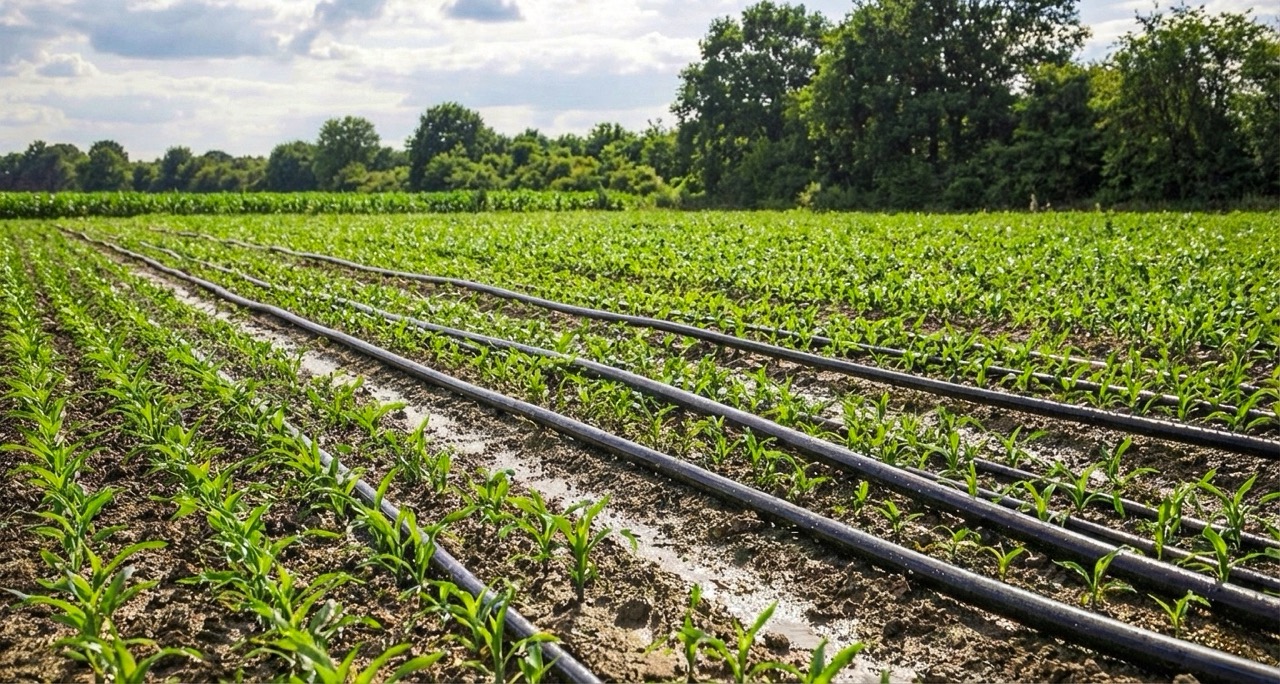
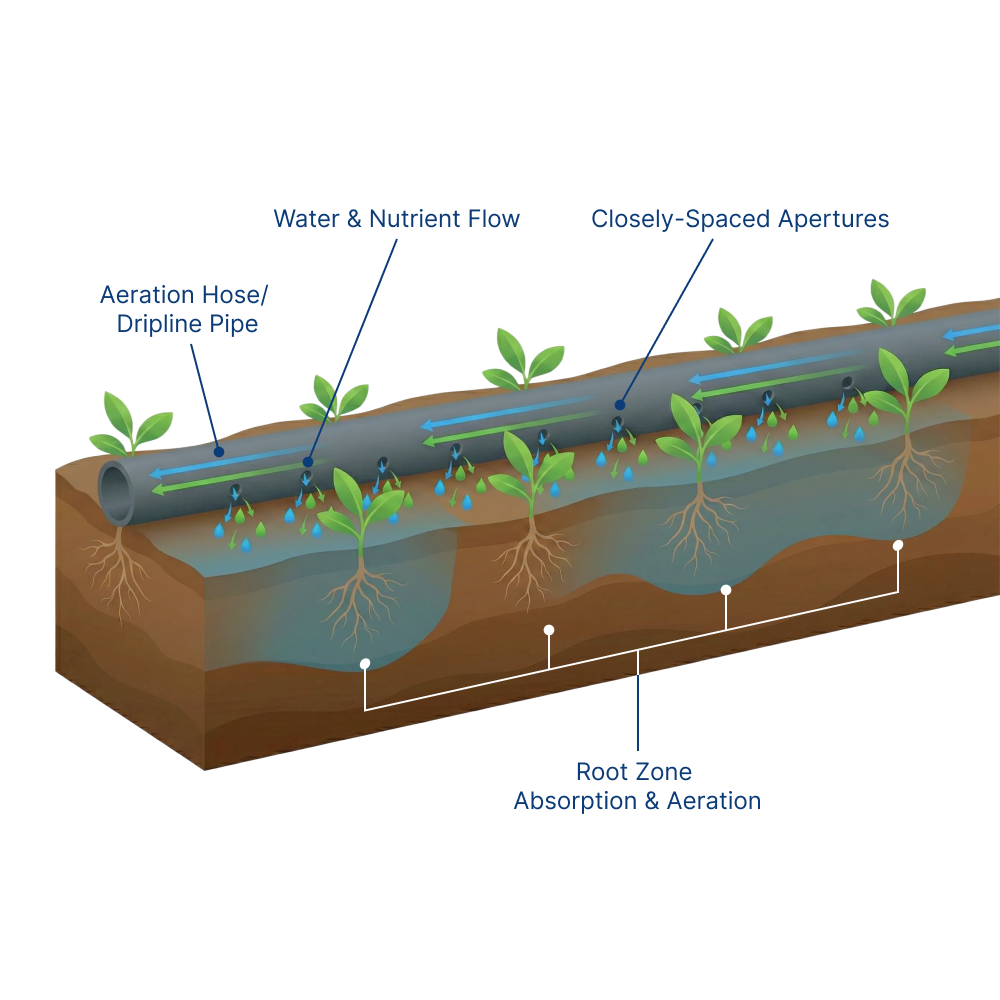
In agricultural irrigation, aeration hoses can be used as specialized driplines to deliver water, nutrients, or air evenly along the soil profile. Unlike conventional drip emitters that release water at fixed intervals, aeration hoses feature thousands of closely spaced apertures that create a continuous wetting pattern. This makes them particularly useful in sandy soils, dense row crops, and advanced irrigation strategies such as root-zone aeration.
By distributing water or air uniformly along the entire hose length, aeration hoses help eliminate dry gaps between plants and support healthier root environments, even under ultra-low pressure conditions.
Key benefits include:
.svg)
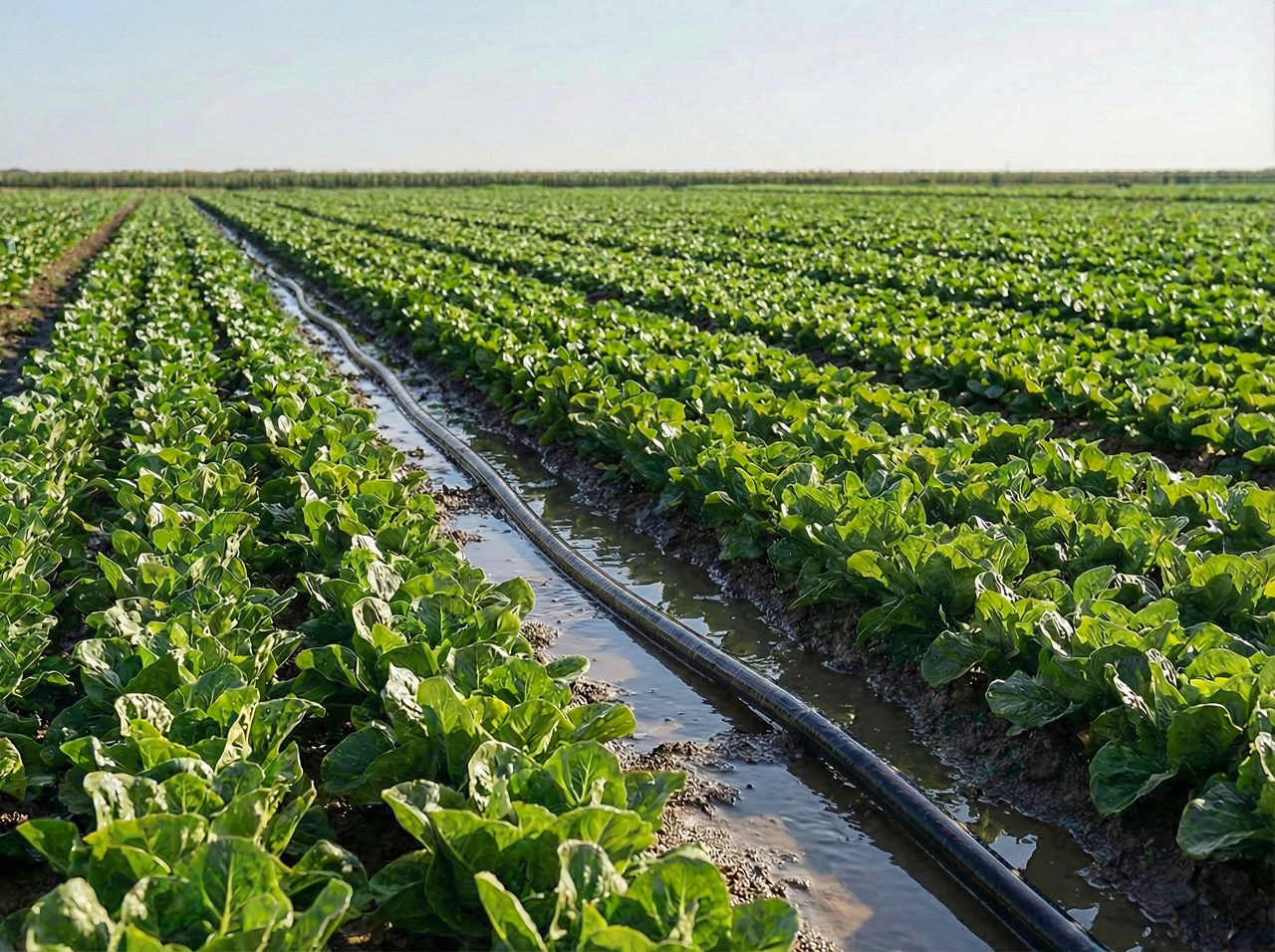
While effective in specific scenarios, conventional aeration tubing presents several limitations when adapted for irrigation use:
AeroFlux adapts aeration hose technology specifically for irrigation and aeration applications by combining precision-engineered apertures with advanced material performance. Its self-regulating design improves distribution uniformity, while specialized materials resist clogging, chemical exposure, and environmental degradation.
Self-closing apertures open only under sufficient internal pressure, improving flow consistency along the hose.
Biofouling-resistant materials reduce internal buildup from algae, minerals, and fertilizers.
Suitable for both liquid delivery and controlled air injection into the root zone.
Excellent resistance to weathering, UV exposure, and agricultural chemicals.
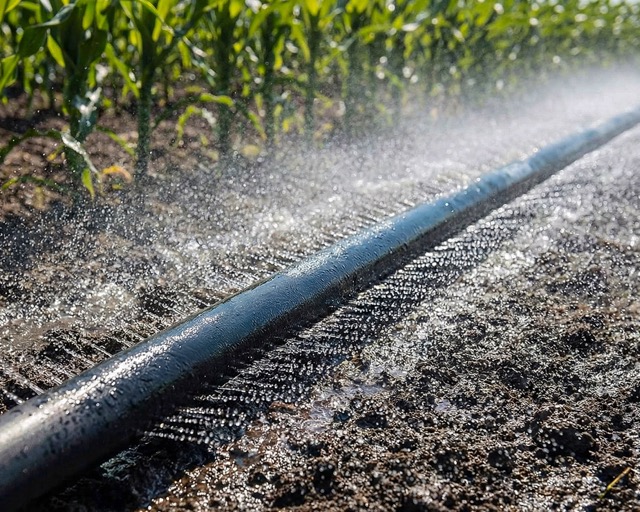
Recommended hose materials for long-term performance in irrigation and root-zone aeration: