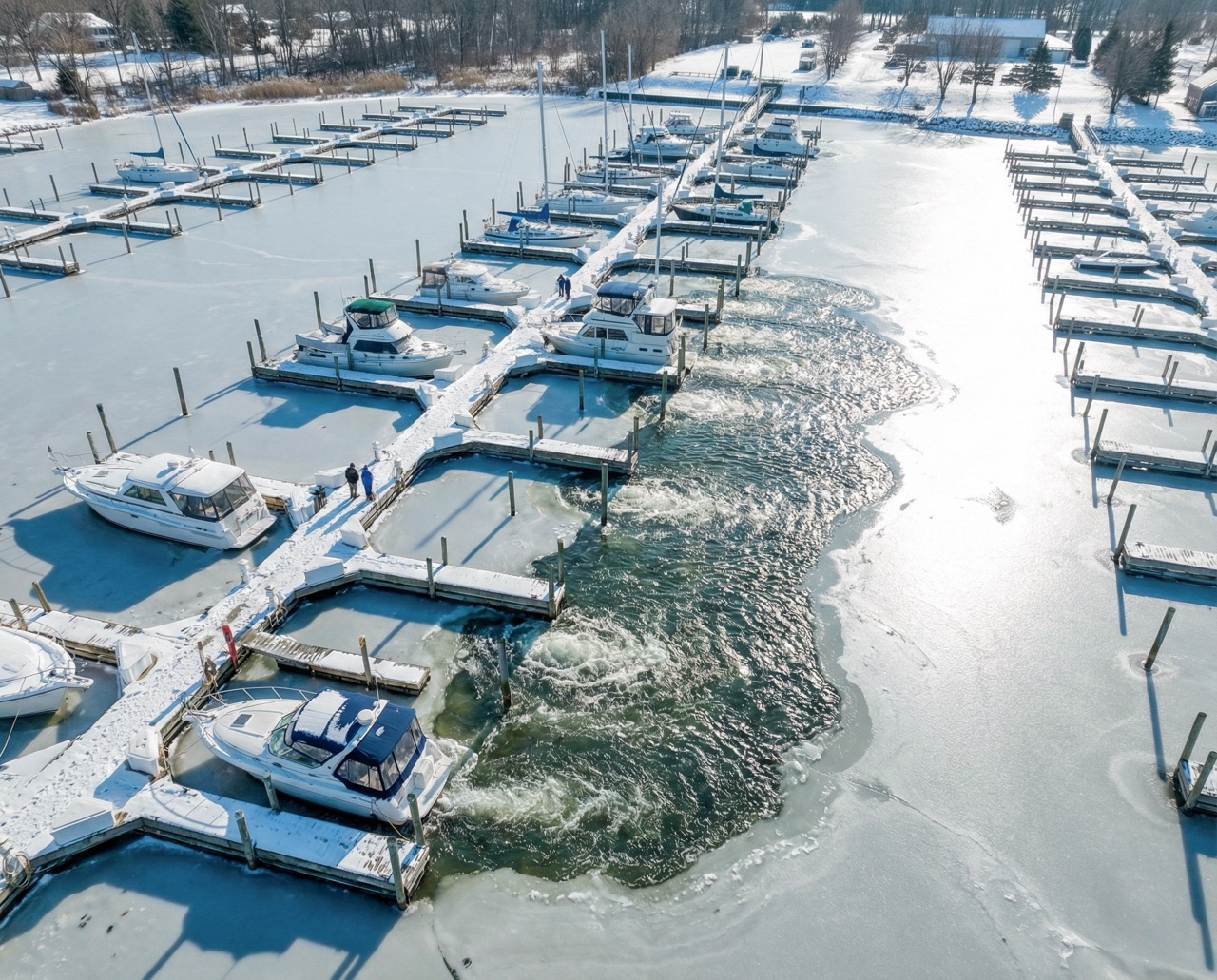
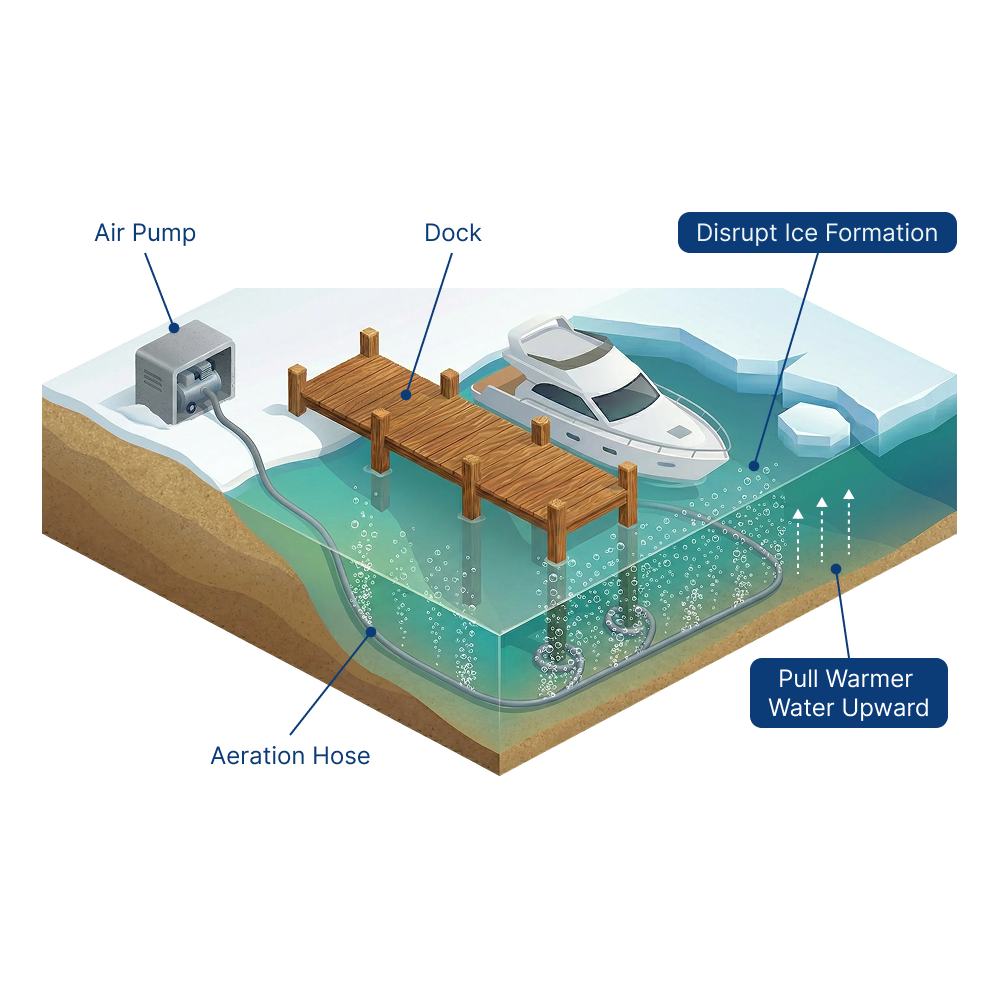
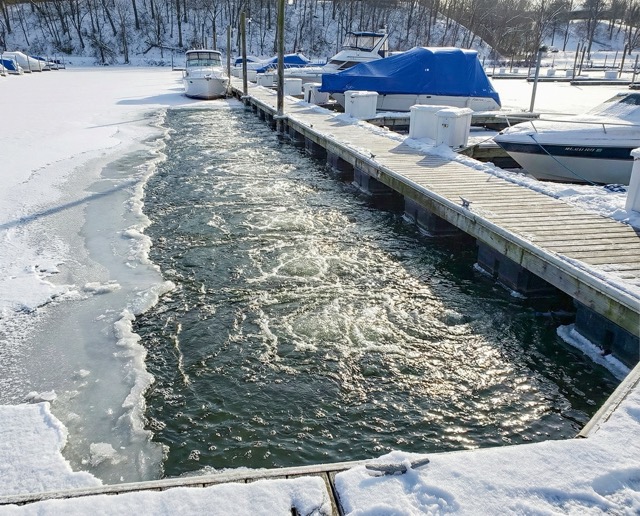
Deicing prevents ice formation around docks, pilings, and boats by circulating warmer bottom water to the surface. In freezing climates, ice expansion and movement can lift pilings, crush hulls, and destroy dock structures. Aeration hose systems, also known as bubbler systems, counter this damage by continuously moving water and disrupting ice formation before it can take hold.
Laid along the bottom, aeration hoses release a curtain of fine bubbles that shear the water column. As the bubbles rise, they pull denser bottom water, typically around 4°C (39°F), upward. This thermal transfer melts surface ice and keeps critical areas ice-free throughout the winter season.
Key benefits include:
.svg)
While aeration-based deicing is highly effective, traditional diffuser tubing often becomes the weak point in harsh winter conditions:
AeroFlux addresses these challenges with durable and efficient diffuser hose technology engineered specifically for cold, marine environments. Designed to operate reliably through freeze–thaw cycles, AeroFlux ensures consistent bubble release and effective thermal circulation where deicing performance matters most.
Automatically settles at optimal depth for effective thermal transfer without external weights.
Remains flexible and kink-resistant in freezing temperatures.
Self-closing apertures and specialized surface materials resist clogging and marine growth.
Specialized materials, including TPV, withstand fuel and oil exposure common in marinas.
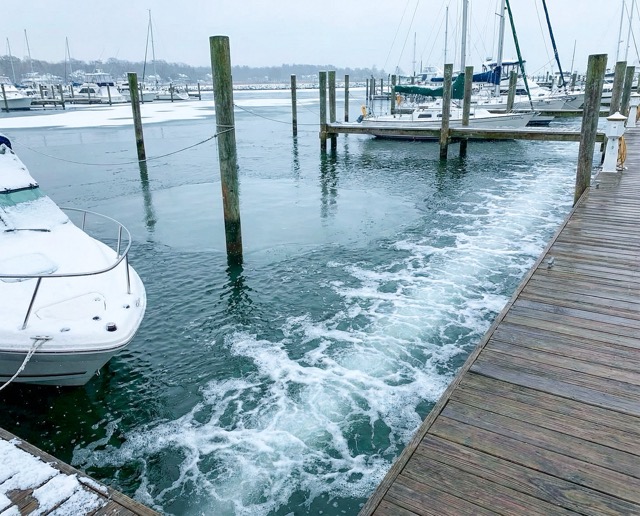
Recommended hose materials for long-term durability in cold, oil-exposed marine environments: